MASS TIMES
Week-end Mass
Saturdays
12:05 p.m.
5:00 p.m. Vigil (English)
Sundays
8:00 a.m. (English),
9:30 a.m. (Latin),
11:00 a.m. (English),
12:30 p.m. (English),
3:15 p.m. (Vietnamese),
and 5:00 p.m. (English)
Daily Mass
Weekdays (Mon-Fri)
12:05 p.m.
5:15 p.m.
CONFESSION
Weekdays (Mon-Fri)
11:00 a.m.–11:45 a.m.
4:00–4:45 p.m.
Saturdays
11:00 a.m.–11:45 a.m.
4:00–4:45 p.m.
ROSARY
Weekdays
4:50 p.m.
Saturday
4:35 p.m.
EUCHARISTIC ADORATION
Friday 12:45 p.m.–5:00 p.m.(Benediction at 5:05 p.m.)

HOLY ROSARY
Holy Rosary Parish was founded by the Dominican Friars in 1913 when they were invited by Bishop Nicholas A. Gallagher to serve the needs of 125 families living in what was then Houston’s south side. At the time, the city had only 82,000 citizens. As soon as the parish was established, work began on a two-story building on land donated by William H. McCarthy.
Since its inception in 1913*, Holy Rosary Church has served as the physical foundation from which the Dominican Friars have provided spiritual care throughout the city and nurtured the faith of generations of parishioners.
*Bishop of Galveston Blessed the Parish in November of 1933.

Visit Our Holy Rosary Knights >>
Today, Father McGivney is being considered for sainthood.
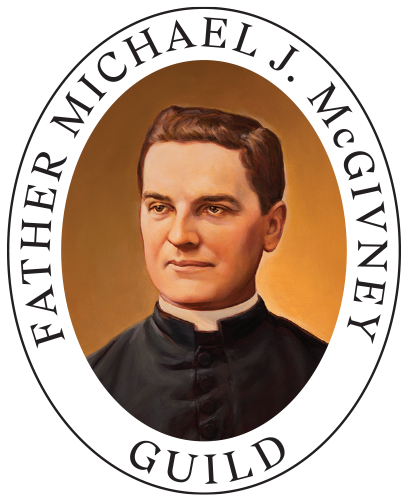
Father Michael J. McGivney
The founder of the Knights of Columbus, Father Michael J. McGivney was a central figure in the growth of Catholicism in America, and he remains a model today. His example of charity, evangelization and empowerment of the laity continues to bear fruit and guide Knights of Columbus around the world.

Safe & Secure Ministries Team
Calling All Safety, Security & Medical Professionals in our Parish. We Need Your Help!
"Saint Michael the Archangel, defend us in battle. Be our protection against the wickedness and snares of the devil; May God rebuke him, we humbly pray; And do thou, O Prince of the Heavenly Host, by the power of God, thrust into hell Satan and all evil spirits who wander through the world for the ruin of souls. Amen."


RCIA | 2023-2024
Rite of Christian Initiation for Adults


IGNITE:
Our Faith,
Our Mission
Beginning in the Spring of 2017 to raise monies
in these critical areas of the Archdiocese:
• St. Mary’s Seminary
• Catholic Education
• Lay Ministry Formation
• Parish Support
The following two case elements were added after the devastation of Hurricane Harvey in
August of 2017:
Harvey relief
Future Disaster fund

Join US on Flocknote
Text HRCC to 84576
NOTE: For now, Flocknote will only be used to keep you updated on important church notifications.

Holy Rosary now has an online giving option for all collections throughout the year. This option is a great way to support your church, honor the Lord, and better budget your resources as you plan to regularly contribute to the life and mission of the Church.